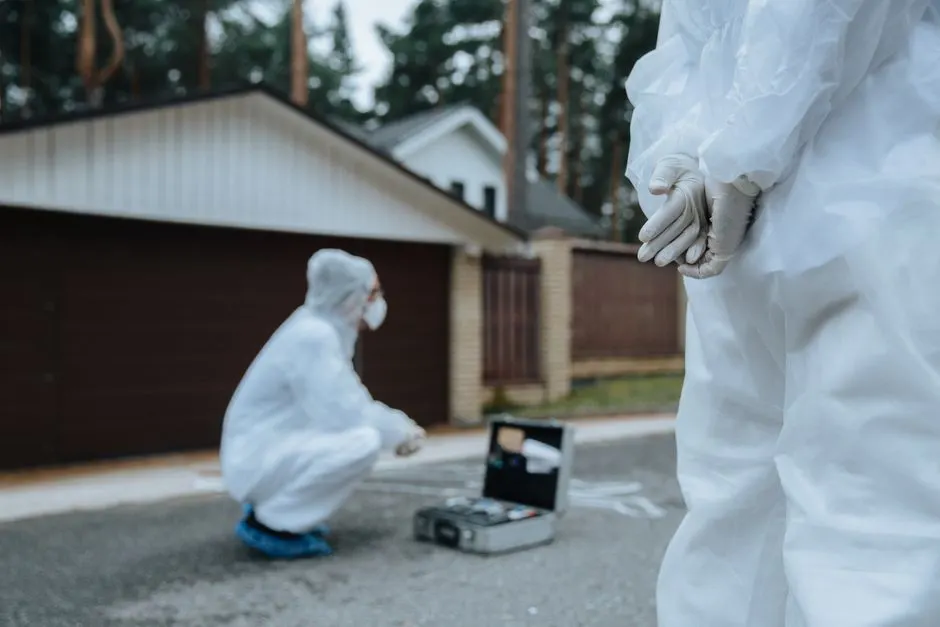
Full System Isolation
We shut the main, isolate hot and cold domestic lines, and pressure test each one separately with calibrated gauges. This tells us which side of the system is leaking before we spend time locating the exact spot.
Every detection visit covers the full diagnostic from isolation to confirmed location. Repair is quoted separately once we know what we are dealing with, and you decide whether to book it with us or take the report to another contractor.
We shut the main, isolate hot and cold domestic lines, and pressure test each one separately with calibrated gauges. This tells us which side of the system is leaking before we spend time locating the exact spot.
Acoustic listening devices and a FLIR thermal imaging camera are used together on every job. Two independent methods confirming the same spot is what separates a real detection from an educated guess.
We map moisture readings across the affected slab area with a Fluke moisture meter and photograph the results. You get a written report showing where the leak is and how far the moisture has spread.
Once the leak is confirmed, we give you the repair price in the same visit. Spot repair, reroute, or full line replacement, all quoted in plain numbers with no pressure to decide on the spot.
We photograph your water meter before and after the repair so you have documented proof the leak stopped. Useful for insurance claims and for your own peace of mind on the next bill.
Slab Leak Detection in Brea is the process of locating a pressurized water leak beneath your concrete foundation without tearing up the whole floor. We pressurize the line, listen for the escape with acoustic listening devices, and confirm the hot spot with a thermal imaging camera. Most Brea homes we inspect have copper pipes under the slab, and those pipes fail at joints and elbows long before the pipe wall does.
Brea sits on expansive clay soil that swells in winter and shrinks hard in summer, and that movement stresses under-slab lines year after year. Homes in Birch Hills and Country Hills built in the 1960s and 70s are the ones we see most. If you have been searching for slab leak detection near me Brea and watching a water bill climb $80 to $200 a month, the leak is usually already weeks old.
Five steps, no guesswork, and you know the price before we open anything up. Here is exactly what happens from the phone call to the final pressure test.
Schedule
Call or book online — a real human picks up and confirms a 2-hour arrival window.
Diagnose
Licensed tech inspects on-site, then walks you through the cause and your options.
Fix
The job is completed to code and done right the first time — no shortcuts, no surprises.
Guarantee
Every job backed by a written workmanship warranty — and we stand behind it.
Acoustic Listening Devices
Amplify the sound of pressurized water escaping a pipe so we can triangulate the leak location from multiple points on the floor.
FLIR Thermal Imaging Cameras
Show hot-water slab leaks as a warm stripe on the floor and cold leaks as a cool one. Confirms acoustic readings with a second method.
Pressure Testing Gauges
Isolate and pressurize each line separately at 100 PSI to confirm which side of the system is leaking before we locate the spot.
RIDGID Pipe Inspection Cameras
Run through cleanouts to visually inspect sewer and drain lines for breaks, bellies, and joint failures under the slab.
Sewerin Tracer Gas Detectors
Confirm leak locations on lines where acoustic signals are faint, especially cold-water leaks in sandy or clay soil.
Fluke Moisture Meters
Map moisture spread across the slab and flooring so we know how far the water has traveled from the leak point.
Milwaukee and Bosch Concrete Saws
Cut clean, controlled access points in the slab once the leak is confirmed, minimizing damage to surrounding flooring.
System Isolation and Pressure Testing
We shut the main, isolate hot and cold domestic lines, and pressurize each one separately. This step tells us which side is leaking within 15 minutes and prevents wasted time locating the wrong line.
Acoustic Triangulation
We listen at multiple points on the floor with acoustic equipment and triangulate the loudest signal. Two or three listening positions narrow the leak to within a few inches of the actual break.
Thermal Confirmation
A FLIR thermal imaging camera confirms the acoustic reading by showing the temperature contrast on the floor. Two independent methods agreeing on the same spot is our standard before any concrete is cut.
Tracer Gas Verification
For cold-water leaks where acoustic and thermal signals are weak, we introduce tracer gas into the isolated line and detect where it escapes the slab. This method is accurate to within a few inches.
Pressure Test After Repair
Every repair is pressure tested at 100 PSI for 30 minutes before we close the access. If the line does not hold pressure, we do not close the floor.
01
What we do: We isolate the hot-water line, confirm the leak with acoustic and thermal equipment, and mark the spot within a few inches. The repair is a small access cut and a section replacement with new copper piping.
→ Water bill returns to normal the next billing cycle, and the warm spot on the floor is gone within a day of the repair.
02
What we do: We run moisture meters along the slab edge, pressure test the cold line, and locate a pinhole leak under the hallway. The repair is scheduled for the next morning to minimize tenant disruption.
→ Tenant has water back the same day, the musty smell clears once the slab dries, and the unit passes inspection.
03
What we do: A technician arrives within 90 minutes, shuts down the main, and confirms a hot-water slab leak under the bathroom. We isolate the line overnight and schedule the repair for the next morning.
→ No further water damage overnight, repair completed the next day, and the meter stops spinning the moment we finish.
04
What we do: We schedule overnight detection, confirm the leak location, and complete the repair before the store opens. The work is done under a C-36 Plumbing Contractor License with proper permits filed.
→ Store opens on time the next morning with no disruption to business and the leak permanently repaired.
Brea's building stock splits into two groups: mid-century tract homes built between 1955 and 1975 with original copper under the slab, and newer construction from the 1990s and 2000s with PEX or copper in different configurations. The older homes in Birch Hills, Country Hills, and Olinda Village are where we find most pinhole leaks and joint failures. Brea's expansive clay soil moves with every wet winter and dry summer, and that flexing stresses under-slab lines year after year. Homes on the hillsides around Brea Hills and Olinda Ranch see more soil movement than flat-lot neighborhoods, which means more pipe joint stress. If you are searching for slab leak detection and repair Brea CA, we work the 92821, 92822, and 92823 ZIP codes daily and know the pipe materials used in each tract. Winter is our busiest season for slab leaks because the soil swells and shifts, but we run calls year-round.
Birch Hills
Mid-century tract homes with original copper under the slab. Pinhole leaks and joint failures are common, especially on the hot-water side.
Country Hills
Homes built in the 1960s and 70s with copper supply lines. We see more slab leaks here than anywhere else in Brea.
La Floresta
Newer construction with PEX and copper lines. Leaks here are usually at fittings rather than pipe walls.
Olinda Village
Hillside lots with more soil movement. Pipe joint stress from foundation flexing is the main cause of leaks we find.
Downtown Brea
Mix of older commercial and residential slabs. We run overnight detection for businesses that cannot close during the day.
Expansive clay soil that swells and shrinks seasonally
Soil movement stresses under-slab pipes at joints and elbows, which is the leading cause of slab leaks we repair in Brea.
Hard water with high mineral content
Minerals in Brea's water supply accelerate corrosion inside copper pipes, leading to pinhole leaks in homes over 30 years old.
Winter soil saturation after heavy rain
Saturated soil increases pressure on under-slab lines and is when most Brea homeowners first notice a slab leak.
Summer soil shrinkage and foundation movement
Dry soil pulls away from the slab and can crack pipe joints. We see a second spike in slab leak calls in late summer.
Every slab leak we get called for in Brea falls into one of a few categories. Here is what we see most, what happens if you wait, and how we fix it.
Problem
A hidden slab leak can waste 10,000 to 30,000 gallons a month, and the damage under the slab grows with every billing cycle you wait.
Our Fix
We isolate the hot and cold lines, pressure test each side, and use acoustic listening devices to pinpoint the leak. Most hidden leaks are confirmed within 90 minutes and repaired the same week.
Problem
A warm floor spot means a hot-water slab leak is heating the concrete from below. Left alone, it softens the soil, cracks tile, and can shift the foundation over a wet season.
Our Fix
We scan the floor with a FLIR thermal imaging camera to map the warm stripe, then confirm with acoustic equipment. Hot-water leaks are usually the easiest to locate and repair with a small access cut.
Problem
That sound is pressurized water escaping a pipe under your slab. It does not stop on its own, and the longer it runs, the more soil erodes under the foundation.
Our Fix
We pressure test the system to confirm the leak is under the slab, then locate it with acoustic equipment. If the line is repairable, we cut one access and fix it. If not, we reroute through the attic.
Problem
Flooring cracks over a slab leak because the soil underneath is moving. Ignoring it leads to foundation repair, which costs five to ten times what a slab leak repair does.
Our Fix
We locate the leak, repair or reroute the line, and pressure test before closing the access. Once the water source is stopped, the soil stabilizes and the flooring stops moving.
A slab leak never fixes itself. Here is what you actually get when you book detection with us instead of guessing.
Pinpoint Locating, Less Concrete
We mark the break within a few inches using acoustic listening devices and pressure testing gauges, so the repair crew cuts one small access point instead of trenching your hallway. That is the difference between a $600 patch and a $6,000 floor replacement.
Same-Week Repair Scheduling
Detection takes 60 to 90 minutes. When we confirm the leak, we schedule slab leak repair Brea California homeowners can plan around, usually within two to four business days, and we handle reroutes and spot repairs without pulling a second contractor into the job.
Water Bill Proof You Can See
We photograph the meter before and after the repair and hand you the readings. Most customers see their bill drop back to normal within one full billing cycle. If your meter was spinning with every fixture off, that stops the day we finish.
Foundation and Flooring Protected
Standing water under a slab softens soil and cracks tile, and in Brea's clay it can shift a foundation by fractions of an inch over a single wet season. Finding the leak early keeps that damage from spreading into the structure of your home.
Google ★★★★★4.9
Found our slab leak in under an hour after two other companies guessed wrong. They marked the spot, quoted the repair, and had it fixed the same week. Water bill is back to normal. Highly recommend for anyone in Brea dealing with a mystery leak.
Yelp ★★★★★5.0
Called at 11 p.m. with water coming through the garage floor. Tech was here in about 80 minutes, shut the line down, and confirmed the leak that night. Repair was done two days later. Professional, clean, and honest about pricing.
BBB ★★★★★4.8
We manage several rental properties in Brea and have used these guys three times. They always confirm the location with two methods before quoting, which is why I keep calling them. Fair prices and they show up when they say they will.
Google ★★★★★4.9
Our water bill tripled and we had no idea why. They isolated the hot line, found a pinhole leak under the hallway, and repaired it with one small cut. Pressure tested before closing. No mess, no drama, no surprise charges.
Brea Leak Detection Pros has been locating and repairing under-slab leaks since 2011, which means 15 years of Brea soil, Brea building stock, and Brea plumbing codes. Our technicians hold the California State Plumbing License and work under a C-36 Plumbing Contractor License, and every job follows the Uniform Plumbing Code and California Building Standards Code. We have located leaks in tract homes off Lambert Ranch, mid-century builds in Olinda Village, and commercial slabs along the Brea Boulevard corridor. Detection is a skill, not a gadget, and 15 years of listening to pipes teaches you what a pinhole leak sounds like at 40 feet.
Real experiences from customers who chose our Slab Leak Detection services.
“Our water bill went from $110 to $340 in two months and we could not find anything. Brea Leak Detection Pros came out, isolated the hot line, and had the leak marked in about 45 minutes. It was a pinhole in the copper under the hallway. They cut one 18-inch access, repaired it, and pressure tested before closing. Bill is back to normal.”
Marisol R.
Homeowner, Country Hills
“Called at 10 p.m. on a Tuesday with water coming up through the garage slab. A tech was here in about 75 minutes, shut the line down, and confirmed the leak that night. Repair was scheduled for Thursday morning. They rerouted the line through the attic instead of cutting the whole floor. Clean work, fair price, no drama.”
Derek T.
Homeowner, Downtown Brea
“I manage six rental units in Birch Hills and have used these guys three times now. They always confirm the location with two methods before quoting, which is why I trust them. Last job was a cold-water slab leak under a tenant's kitchen. Detection fee was credited toward the repair, and the tenant had water back the same day.”
Angela P.
Property Manager, Birch Hills
Real answers to the questions we hear most often from local homeowners and property managers.
Pool leaks and slab leaks share symptoms: a climbing water bill and unexplained wet spots. We pressure test pool plumbing separately from the domestic lines so you know which system is losing water before anyone digs.
View Pool Leak DetectionNot every leak is under the slab. We trace leaks in walls, ceilings, and supply lines with the same acoustic and thermal tools, then hand off to slab-specific work if the source turns out to be below the foundation.
View Plumbing Leak DetectionGas lines run under slabs in some Brea builds. We use tracer gas detectors and pressure testing to confirm a gas leak location, then coordinate the repair under the same C-36 license.
View Gas Leak DetectionAcoustic listening devices are the core of how we find slab leaks in Brea. We amplify the sound of pressurized water escaping a pipe and triangulate the exact spot from multiple listening points on the floor.
View Acoustic Leak DetectionA FLIR thermal imaging camera shows hot-water slab leaks as a warm stripe on the floor. We pair thermal with acoustic readings so the location is confirmed by two independent methods before we cut.
View Thermal Imaging Leak DetectionElectronic leak detection equipment picks up the electrical signature of water moving through soil. It is useful on cold-water slab leaks where acoustic signals are faint and thermal contrast is minimal.
View Electronic Leak DetectionCall (657) 681-3703 any time, day or night. A live dispatcher answers, asks a few questions about what you are seeing or smelling, and gets a tech headed your way. Most Brea calls get a same-day window, and emergency calls roll 24/7. You can also email leakdetectionbrea@gmail.com and we will respond within one business hour during regular hours.
Phone
(657) 681-3703Address
200 Fig Ave, Brea, CA 92821, USA
Hours
Monday–Sunday: 7 Days a Week
Open 24 Hours
Same-Day Service
24/7 Emergency Available